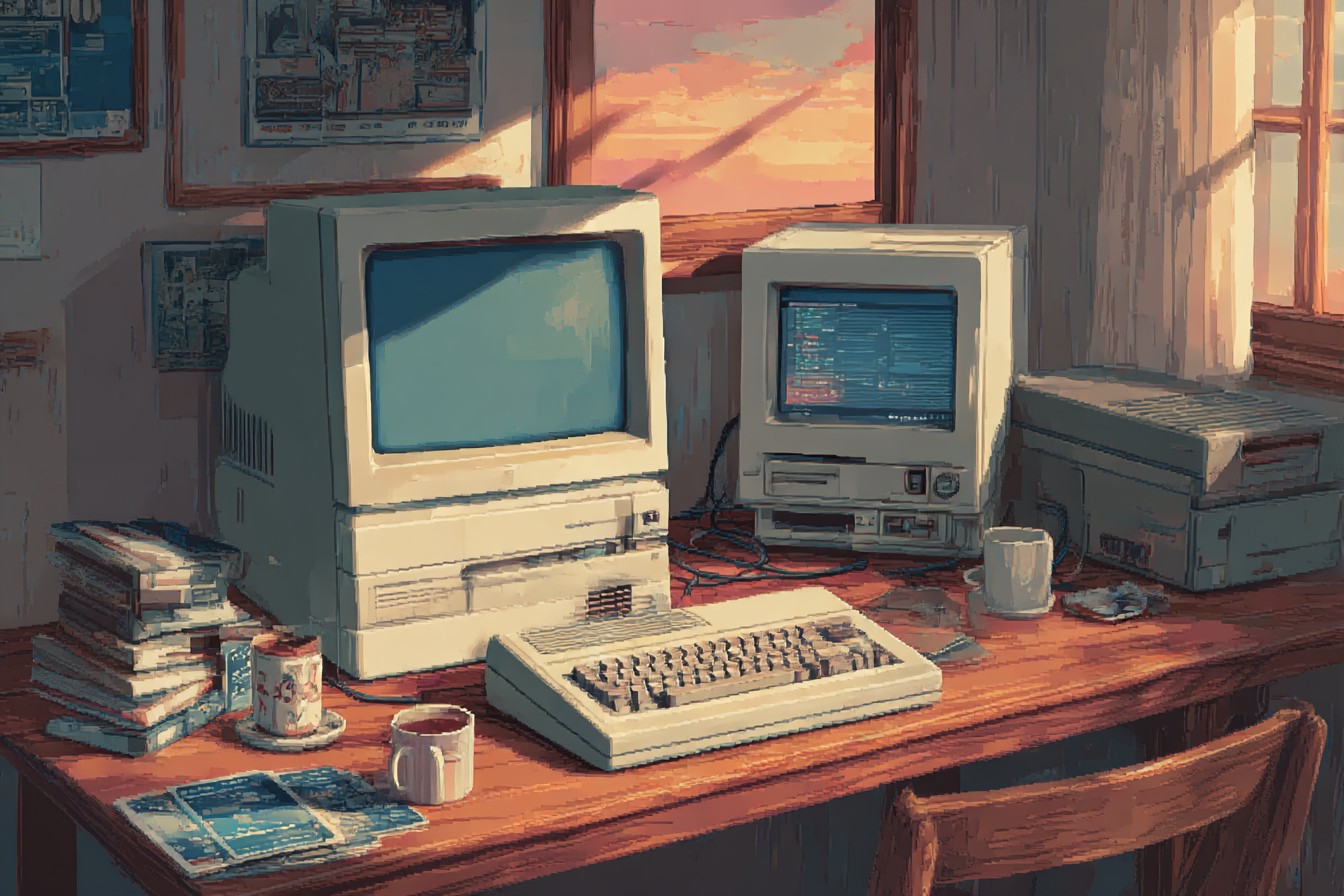
My mate Dave knocked on the door last Saturday morning holding a battered cardboard box like it contained the Holy Grail. Inside? His dad's old 486 DX2/66 complete with a double-speed CD-ROM drive that made sounds like a cement mixer having an argument with itself. "Thought you might want this," he said, grinning. That's when it hit me—we're living through the archaeology of our own childhood, and the 90s PC gaming scene is buried treasure most people never even knew existed.
See, console kids had it easy. You bought a cartridge, shoved it in, and Bob's your uncle. But PC gaming in the 90s? That was like joining a secret society where the password was "IRQ 7" and the handshake involved configuring AUTOEXEC.BAT files. I spent more Saturday mornings troubleshooting sound card drivers than actually playing games, and somehow that became part of the ritual. The anticipation while CONFIG.SYS loaded, praying you'd freed enough conventional memory to run Wing Commander without the music cutting out—that was foreplay, basically.
The shareware scene was pure genius wrapped in 1.44MB floppy disks. id Software figured out something brilliant: give away the first episode of DOOM for free, then watch people mortgage their souls for the full version. I must've copied that shareware floppy a hundred times, passing it around school like contraband. "E1M1" became a religious experience—that opening shotgun blast, the UAC logo, those chunky pixels that somehow felt more violent than anything I'd seen on television. My dad walked in during a particularly intense Cyberdemon fight and just shook his head. "You're going to rot your brain with that rubbish." Meanwhile, I'm learning advanced geometry through rocket jumping and developing reflexes that would serve me well in actual stressful situations years later.
Commander Keen was my gateway drug to proper PC gaming. Those smooth scrolling levels on EGA graphics felt impossible—how was Billy Blaze moving so fluidly when everything else on PC looked like it was built from Lego blocks? I'd discovered something magical: while my Mega Drive friends were paying thirty quid for new games, I was getting incredible experiences for the price of blank floppies and the occasional registration fee. The Keen series taught me that PC gaming wasn't just arcade ports and business software—it was a whole universe of creativity that lived nowhere else.
LucasArts adventure games turned my computer into a storytelling machine. The Secret of Monkey Island arrived like a masterclass in comedy writing disguised as a puzzle game. I'd never experienced anything like Guybrush Threepwood's rubber chicken with a pulley in the middle—it was absurd, logical, and completely engaging all at once. The SCUMM interface made perfect sense; clicking "Use" on everything became second nature. These games taught me that computers could be theatrical, that pixels could convey personality better than most actors.
When Myst landed, it felt like someone had beamed down from the future to show us what CD-ROMs were actually for. Those pre-rendered backgrounds looked photographic compared to everything else. I spent hours clicking on every book, every button, every slightly suspicious-looking texture. The game demanded patience in a way nothing else did—you couldn't button-mash your way through linking books and mechanical puzzles. My notebook filled with sketches of pipe configurations and cryptic symbols. Myst proved that PC gaming could be contemplative, artistic, even meditative.
The real magic happened when CD-ROM drives became standard. Suddenly we had Wing Commander with actual voice acting, Rebel Assault with movie-quality cutscenes, and The 7th Guest with full-motion video that looked like the future had arrived early. Sure, the acting was cheese on toast and the compression made everything look like it was filmed through a vaseline-smeared window, but we didn't care. This was interactive cinema, and it lived on our desks.
Civilization taught me that "just one more turn" was the most dangerous phrase in gaming. Sid Meier created something that felt less like a game and more like alternate history unfolding in real-time. I'd start a session after dinner and suddenly it's 2 AM and I'm desperately trying to complete the Manhattan Project before Gandhi decides to nuke me into the stone age. The depth was staggering—every decision rippled forward through centuries. Building the Pyramids in 4000 BC felt genuinely meaningful when you were still benefiting from the culture boost in 1800 AD.
Then came DOOM II, and everything changed. Not just because of the double-barrelled shotgun (though that helped), but because of what happened next: modding. People started creating their own levels, their own monsters, their own entire campaigns. The PC gaming community discovered it could create, not just consume. WAD files spread through bulletin board systems like wildfire. I downloaded dozens of custom maps over 14.4k modem connections, each one taking hours but delivering experiences no commercial developer had ever conceived.
Quake pushed things even further. That first time seeing proper 3D polygons instead of sprites—enemy soldiers that looked three-dimensional from every angle—was like watching magic happen in real-time. The mouse-look controls felt alien at first, then became so natural that going back to keyboard-only movement seemed impossibly primitive. QuakeWorld's internet multiplayer turned gaming into a global phenomenon. Suddenly I was fragging people in different countries, learning that lag was a cruel mistress and that dial-up internet was the enemy of competitive gaming.
Half-Life arrived like a PhD thesis on how to tell stories through environmental design. No cutscenes, no exposition dumps—just Gordon Freeman waking up late for work and stumbling into the biggest disaster in science fiction history. The loading screens disguised as tram rides, the seamless transitions between action and exploration, the way NPCs actually seemed to inhabit their world instead of just standing around waiting to dispense quests—Valve had figured out something profound about interactive storytelling.
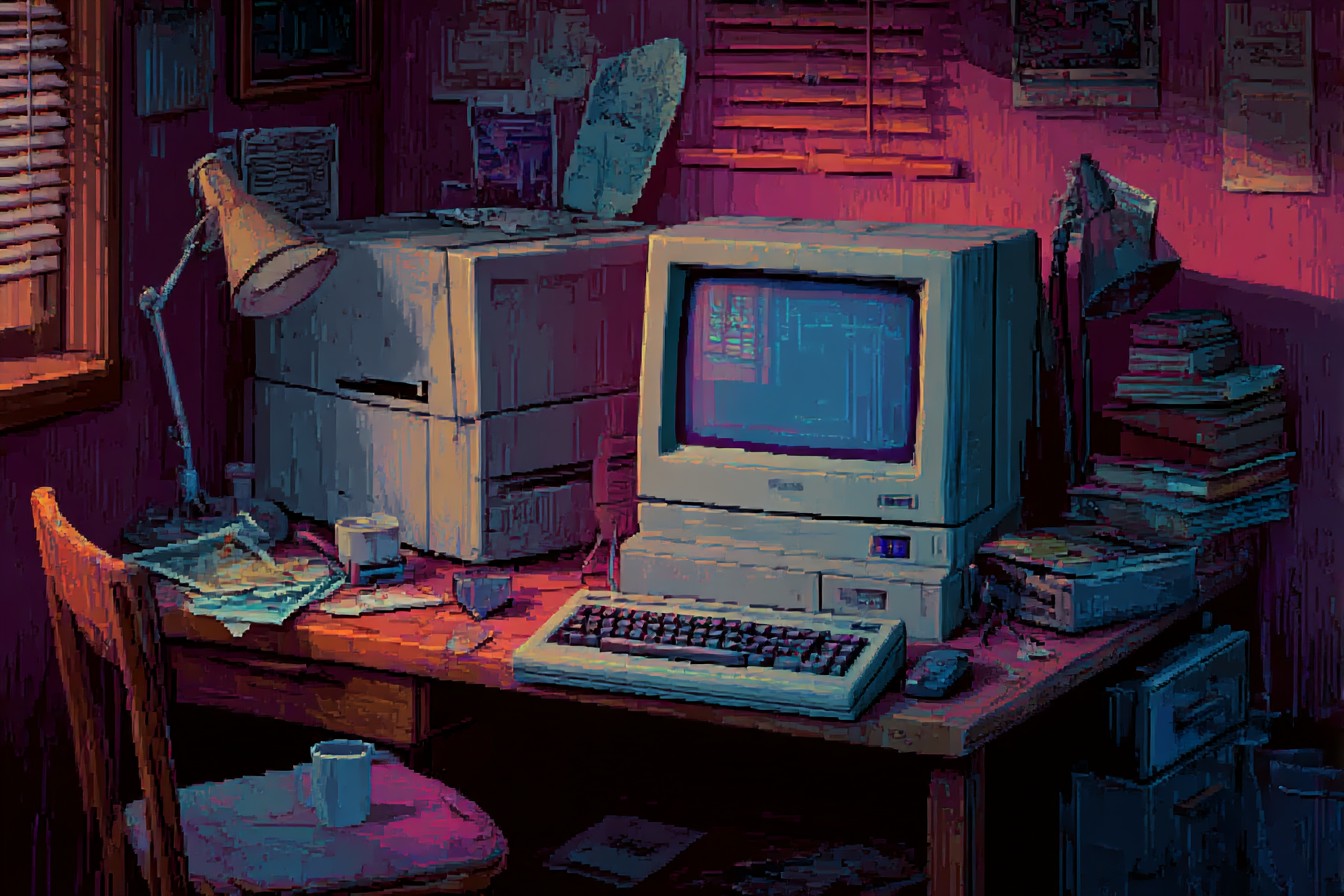
PC gaming in the 90s wasn't just about the games, though. It was about the ritual of optimization. Tweaking HIMEM.SYS, creating custom boot disks for different games, learning that "Turbo" buttons weren't for speed but for slowing down your processor so older games wouldn't run at hyperspeed. We became amateur system administrators out of necessity. I knew more about IRQ conflicts than any teenager had a right to know.
The community aspect was different too. PC gaming felt like being part of a technical brotherhood where sharing knowledge was survival. Magazine cover disks delivered demos and shareware, but also utilities and patches. Computer shows were treasure hunts where you'd find that one vendor selling copied floppies under the table, or the enthusiast who'd modded his case with more LEDs than a Christmas tree.
Looking back, what strikes me most is how experimental everything felt. Developers weren't constrained by console limitations or corporate oversight in the same way. Weird passion projects could find audiences through shareware distribution. The platform rewarded technical innovation and creative risk-taking in ways that shaped not just gaming, but how we think about interactive entertainment today.
That 486 Dave brought over? We spent the afternoon getting it running, complete with SoundBlaster 16 and all the original games. Hearing that DOOM startup sound through genuine FM synthesis, watching Monkey Island load from actual floppy disks—it's not just nostalgia. It's archaeology. We're preserving the moment when computers stopped being just business tools and became something more magical: doorways to worlds that existed nowhere else.