Last Sunday I was digging through a box of N64 cartridges in the loft—you know how it is, searching for one specific game and somehow ending up with dust in your hair and a sudden urge to replay everything you'd forgotten you owned. Anyway, buried beneath copies of Mario Kart that still smell faintly of childhood birthday parties, I found Glover. That weird little rubber ball game that nobody quite knew what to make of back in '98.
I'd completely forgotten I owned it, honestly. Must've picked it up cheap from Blockbuster during one of their clearance sales, probably bundled with something else I actually wanted. The cart was still pristine—barely a scuff on the label, which tells you everything about how often I'd played it back then. But seeing that peculiar artwork again, that anthropomorphic glove holding a red ball like it was the most natural thing in the world… well, it triggered something. A memory of being genuinely baffled by what I was experiencing.
See, Glover came along at a time when everyone was still figuring out what 3D platformers should actually be. We'd had Mario 64 blow our minds with its camera work and analog precision, but most other attempts felt like they were wearing slightly ill-fitting clothes. Too many games were just copying Nintendo's homework without understanding why certain design choices worked. Then along came Interactive Studios with this completely bonkers concept: what if you played as a magical glove whose entire existence revolved around shepherding a bouncy ball through increasingly elaborate obstacle courses?
The premise sounds ridiculous when you say it out loud, doesn't it? But that's exactly what made Glover special—it wasn't trying to be anything other than completely, unapologetically itself. Your character was literally just a glove. Not a glove worn by someone, not a glove that used to belong to someone important. Just… a glove. With eyes. And attitude.
The physics system they built around this concept was genuinely ahead of its time, though I don't think anyone quite appreciated it then. This was proper ball physics we're talking about—the sort of realistic bouncing, rolling, and momentum that would become standard years later but felt revolutionary in 1998. The ball wasn't just a collectible or a weapon; it was your constant companion, your tool, your responsibility. Lose the ball, and you'd have to restart the level. Simple as that.
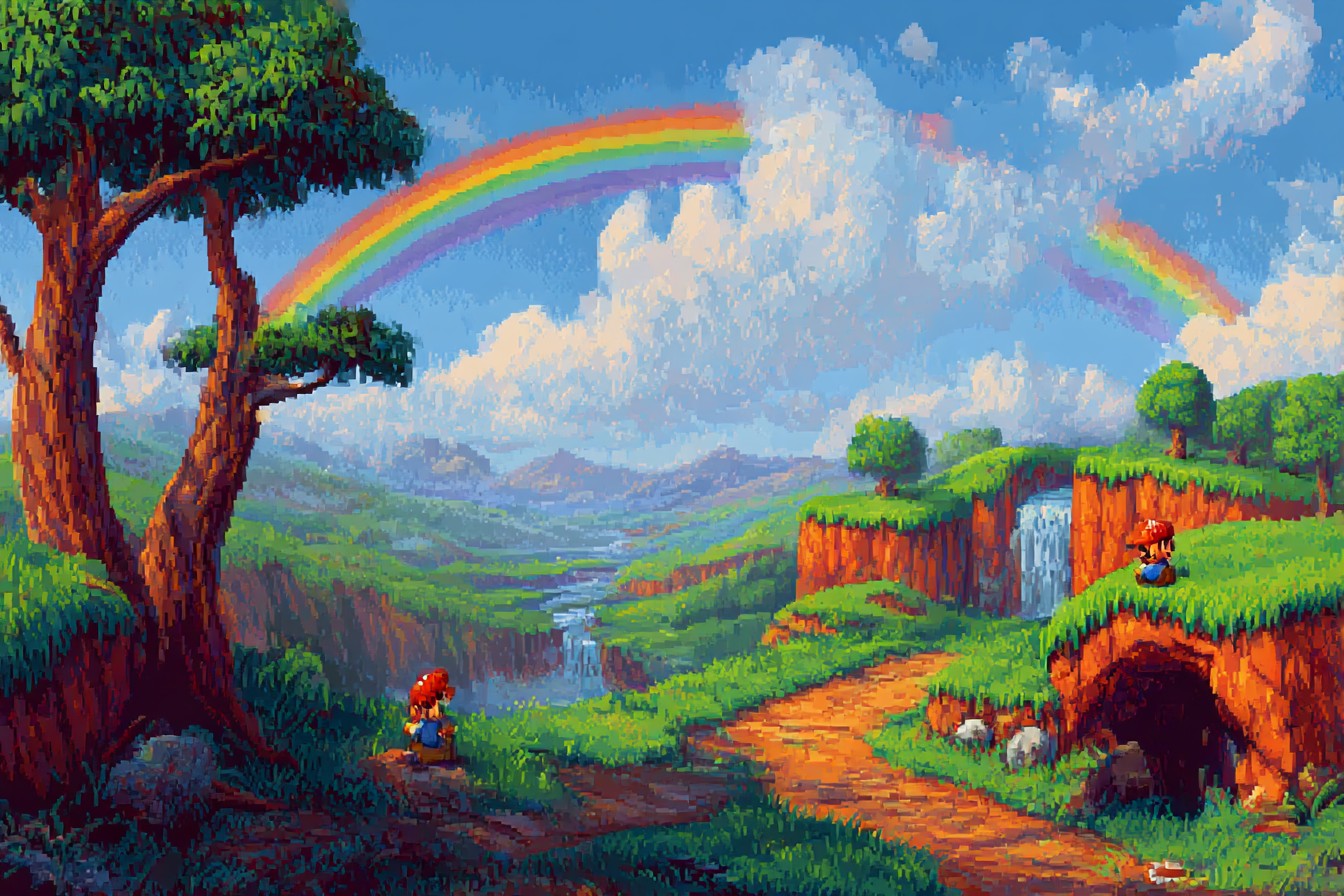
I remember the first time I properly understood what the game was asking of me. You couldn't just run and jump like in other platformers—you had to think about trajectories, about surfaces, about how different ball transformations would interact with the environment. The rubber ball bounced predictably but uncontrollably. Transform it into a bowling ball and suddenly you had weight and momentum but lost the ability to reach higher platforms. Make it a beach ball and you could float it across gaps, but the slightest breeze would send it careening off course.
The level design was properly mental too, in the best possible way. One minute you're navigating a pirate ship with swinging masts and rolling barrels, the next you're in some sort of prehistoric jungle with dinosaurs that seemed to have wandered in from a completely different game. There was a carnival level—because of course there was—complete with bumper cars and funhouse mirrors that actually affected gameplay. Nothing about Glover made conventional sense, and yet it all hung together through sheer force of personality.
What really got me, though, was how tactile everything felt. This was partly down to the Rumble Pak support, which not many games were using effectively yet. When your ball hit the ground, you felt it. When it rolled over different surfaces—wooden planks, metal grating, soft grass—the controller would give you slightly different feedback. It was subtle stuff, the sort of detail that wouldn't show up in screenshots or reviews but made the experience feel more real somehow.
The soundtrack deserves a mention too. Proper bouncy, cartoonish music that somehow never got annoying despite the fact you'd be hearing the same loops repeatedly as you figured out particularly tricky sections. David Whittaker, who'd done brilliant work on Amiga games, composed tracks that perfectly matched the game's off-kilter charm. Peppy without being saccharine, memorable without being intrusive.
Course, it wasn't perfect. The camera could be an absolute nightmare—this was still early days for 3D cameras, remember, and Glover's system had a tendency to get confused during the more complex platforming sections. There were moments when you'd lose sight of your ball entirely, usually right when precision was most important. And some of the later levels pushed the difficulty curve past "challenging" straight into "controller-throwing" territory.
The transformations system, brilliant as it was conceptually, could also be finicky. Switching between ball types required specific button combinations that weren't always intuitive, and the game had an unfortunate habit of not registering inputs properly during heated moments. I can't count how many times I meant to create a bowling ball and ended up with a beach ball instead, watching helplessly as it floated away from the platform I was trying to reach.
But here's the thing—even with its flaws, Glover felt like something genuinely original. In an era when most platformers were desperately trying to recapture Mario 64's magic through imitation, here was a game that went completely sideways. It wasn't trying to be the next big mascot platformer; it was content to be this weird little physics experiment wrapped in Saturday morning cartoon aesthetics.
Playing it again now, on original hardware with my temperamental third-party controller (the good ones are all packed away somewhere safe), I'm struck by how much charm it still has. The graphics haven't aged particularly gracefully—those early polygon models look pretty rough on a modern TV—but the core gameplay holds up surprisingly well. The physics still feel responsive, the level design still surprises, and that sense of "what the hell am I even playing?" remains intact.
It's the sort of game that could never get made today, honestly. Too weird for mainstream appeal, too ambitious for indie budgets, too niche for anyone to take seriously. Which makes it all the more precious, really. A genuine oddity from gaming's most experimental era, when developers were still figuring out what was possible and occasionally stumbling onto something magical by complete accident.
Anyway, I've got it set up in the living room now, much to my family's bemusement. Sometimes you just need to remind yourself that games can be absolutely bonkers and brilliant at the same time.