Sometimes you don't realize a game has ruined you for everything else until years later, when you're fumbling through another run-and-gun shooter wondering why it feels like chewing cardboard. That happened to me recently when I fired up some modern indie thing that promised "classic arcade action." Twenty minutes in, I switched it off and dug out my Model 2 Genesis. Time to remember what perfection actually felt like.
Contra: Hard Corps hit the Mega Drive in 1994, and I still remember the exact moment I knew this wasn't just another sequel. My mate Dave had picked it up from that dodgy game shop near the chippy—you know the type, where half the cartridges had Japanese text and the other half looked like they'd survived a house fire. We'd been expecting more of the same Contra formula: two blokes, spread gun, jump and shoot until your thumbs went numb.
Instead, we got four completely different characters and a weapon system that made every other shooter feel prehistoric.
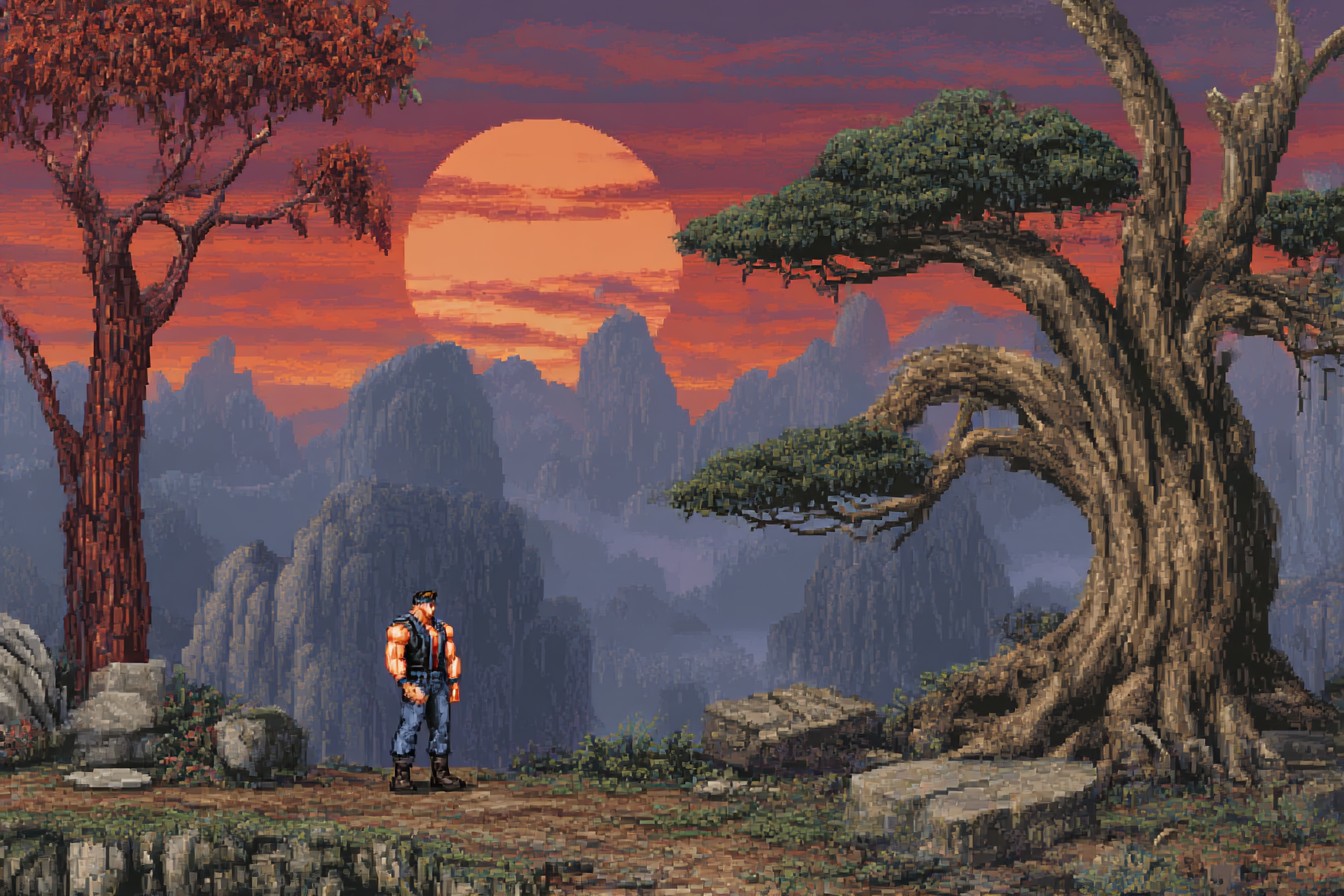
Ray Poelstra was your classic Contra hero—military buzzcut, biceps like tree trunks, the sort who'd punch a helicopter if you asked nicely. Sheena Etranzi brought martial arts and a proper attitude problem. Brad Fang was this cybernetic soldier who looked like he'd stepped out of a particularly violent anime. Then there was Browny, this little robot thing that shouldn't have worked but absolutely did. Each one played completely differently, not just cosmetically but fundamentally. Different weapons, different movement patterns, different strategies for staying alive when the screen filled with bullets.
The weapon system—Christ, where do I even start? Every character had access to four distinct weapon types, but they all behaved uniquely depending on who was holding them. Ray's spread shot felt like the classic Contra experience turned up to eleven. Sheena's version was more focused, surgical almost. Brad's cybernetic enhancements made everything feel heavier, more mechanical. Browny could basically fly while firing, which sounds broken until you realize the trade-offs make perfect sense.
But here's the thing that separated Hard Corps from every other shooter we'd played: the branching paths. Most games in 1994 were still thinking linearly—start at stage one, end at stage eight, maybe throw in a secret level if you collected enough doodads. Hard Corps looked at that convention and set it on fire. Your choices actually mattered. Save the scientist or let him die? Different boss fight. Take the left route or the right? Completely different levels. We mapped out every possible path on the back of an old school exercise book, trying to see everything the game had to offer.
The difficulty was proper mental, of course. This was Konami doing what Konami did best in the '90s—creating games that demanded everything from your reflexes while somehow never feeling unfair. Deaths were quick and brutal, but you always knew exactly what you'd done wrong. The learning curve was steep enough to give you vertigo, but every small improvement felt earned. We'd spend entire Saturday afternoons trying to get through a single boss fight, taking turns until someone's hands cramped up.
That Mega Drive sound chip earned its keep, too. The YM2612's distinctive metallic twang made every explosion feel like industrial machinery tearing itself apart. The music was this perfect blend of military march and electronic chaos—bombastic enough to match the on-screen carnage but never overwhelming the sound effects. Even now, thirty years later, I can hum the first stage theme note-for-note.
The graphics pushed that 16-bit hardware harder than it had any right to be pushed. Massive sprites filled the screen without a hint of slowdown. The backgrounds were layered deep enough to create genuine depth, not just pretty wallpaper. Environmental destruction felt meaningful—blowing up a building wasn't just visual flair, it changed how you navigated the level. The animation was fluid in ways that made other games look like flipbooks.
What really separated Hard Corps from its contemporaries was the sheer imagination on display. Other run-and-gun games were content to throw the same basic enemy types at you with minor variations. Hard Corps went completely mental. One minute you're fighting standard military hardware, the next you're battling a massive alien creature that defies every rule of biology. Boss fights weren't just pattern recognition exercises—they were proper spectacles, screen-filling monsters that demanded different strategies and perfect timing.
The replay value was ridiculous. Four characters, multiple weapon loadouts, branching storylines, difficulty options that actually changed the experience rather than just tweaking damage numbers. We must have played through every possible combination at least twice, and it never felt repetitive. Each playthrough revealed new details, new strategies, new ways to approach familiar challenges.
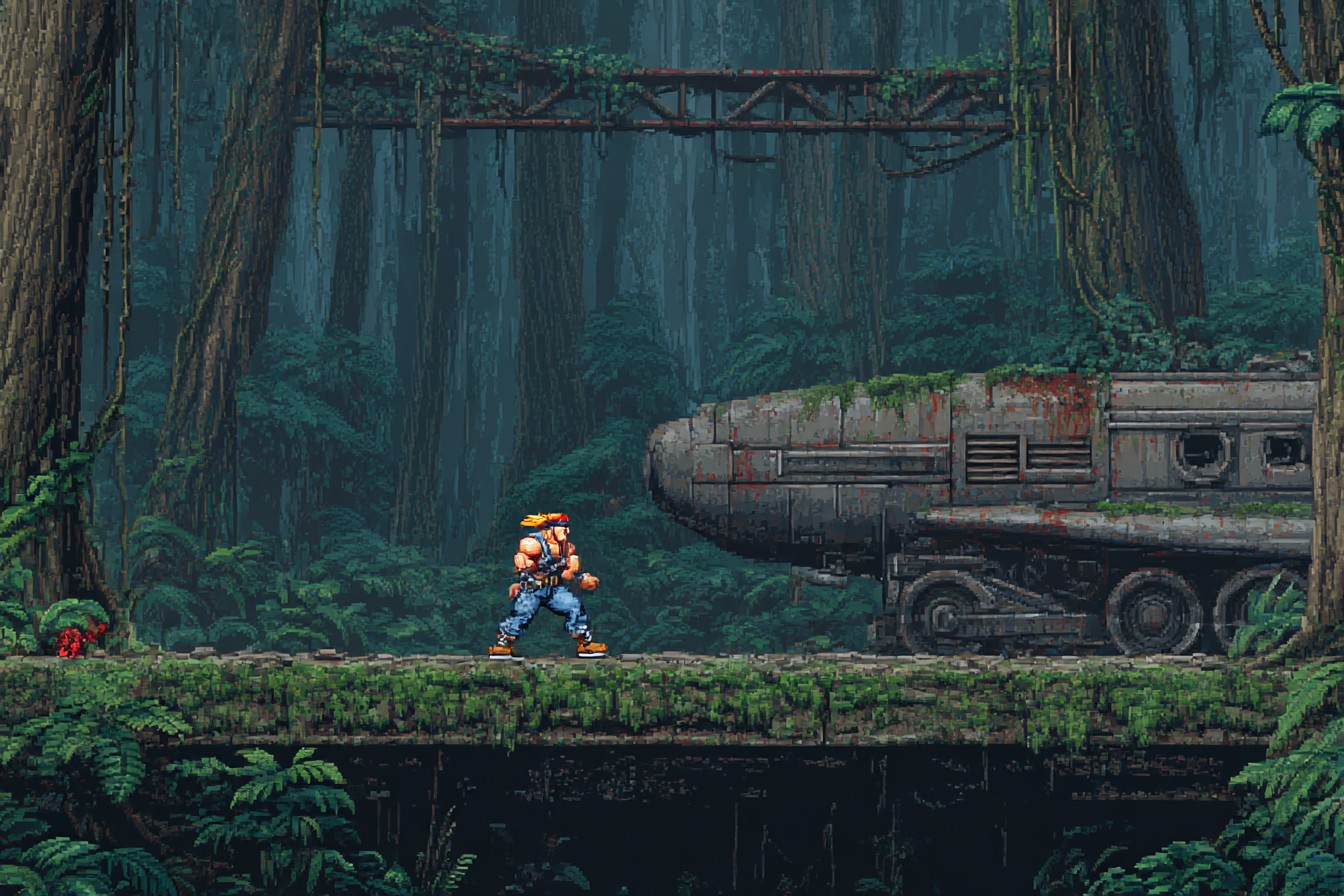
Looking back, Hard Corps represented everything that made the Mega Drive special during the console wars. While Nintendo was focusing on polish and accessibility, Sega was happy to let developers go completely off the rails. The result was this collection of games that felt genuinely dangerous, like they might break your console if you played them wrong. Hard Corps embodied that philosophy perfectly—it was excessive, demanding, and absolutely uncompromising in its vision.
The game also marked the end of an era, though we didn't know it at the time. This was possibly the last great traditional Contra game before the series started experimenting with 3D and losing its way. Hard Corps represented the absolute peak of what the run-and-gun genre could achieve with 16-bit technology and unlimited imagination.
These days, I fire up Hard Corps whenever modern gaming starts feeling too safe, too focus-tested, too worried about alienating potential customers. It reminds me of a time when games were allowed to be difficult, weird, and completely unashamed of what they were. The sort of game that trusted players to rise to its challenges rather than holding their hands through every encounter.
That's run-and-gun perfection: uncompromising, imaginative, and built to last. Hard Corps delivered it all.